
Let me start by saying, South Sudanese women are strong! I have attended 13 sets of twins since my arrival and 3 sets in the last week! The last 2 sets were quite something. I may start buying lottery tickets!
The first mother was a grand multip, 35 years old, G8 and she was term. She walked in to the birth room and started pushing. Out came a beautiful baby perfectly encased in the caul. It was a little girl. Not 2 minutes later, her sister decided to join us. First a big balloon of water came out and then she slipped her head out right into the bubble and then the rest of her was born. Both babies completely born in the caul. Both girls weighed 2.6kg.

The placentas soon followed and there was minimal blood loss. I am always prepared for more blood loss with twins and with a grand multip, but both, I prepare for hemorrhage. So I was thrilled she did not bleed. But after the second baby was born, a look of worry came over the mother. Then she pointed to her belly. I realized she wanted to know if there was another one in there! I assured her there were only 2 by smiling and holding up my fingers. She smiled broadly. Once the placentas were out, I said, “calas” (finished), she got up, walked out the door to the amazement of the other women on the ward who had just seen her walk in less than 20 minutes ago. Now she came out with 2 babies trailing behind her!
The next twin birth was basically a repeat of the first! 36 year old, G10 who not only was term but it was her due date! She walked into the birth room and started pushing. It wasn’t long for a bag of water to appear and then a little head inside of it and out slipped a little girl. I had to puncture the sac because it was still intact even after she came out. About 7 minutes later, another sac appeared and this one I could see little feet and a butt as it emerged. The whole baby, head and all came out encased in the sac all curled up, a perfect little complete breech. If you don’t want any issues with a breech, don’t break the bag of waters, they come out without issue because there is nothing to get hung up on the pelvic bone since they are still all curled up with head tucked.

Both babies were girls. They weighed 2.7 and 2.6 kg. The placentas soon followed and blood loss was less than 400 mls. She got up and walked to the shower. About 20 minutes from start to finish. Both girls were healthy and had very strong opinions about being out in the world as was evidenced by their very loud voices. Their mother looked dazed and overwhelmed.
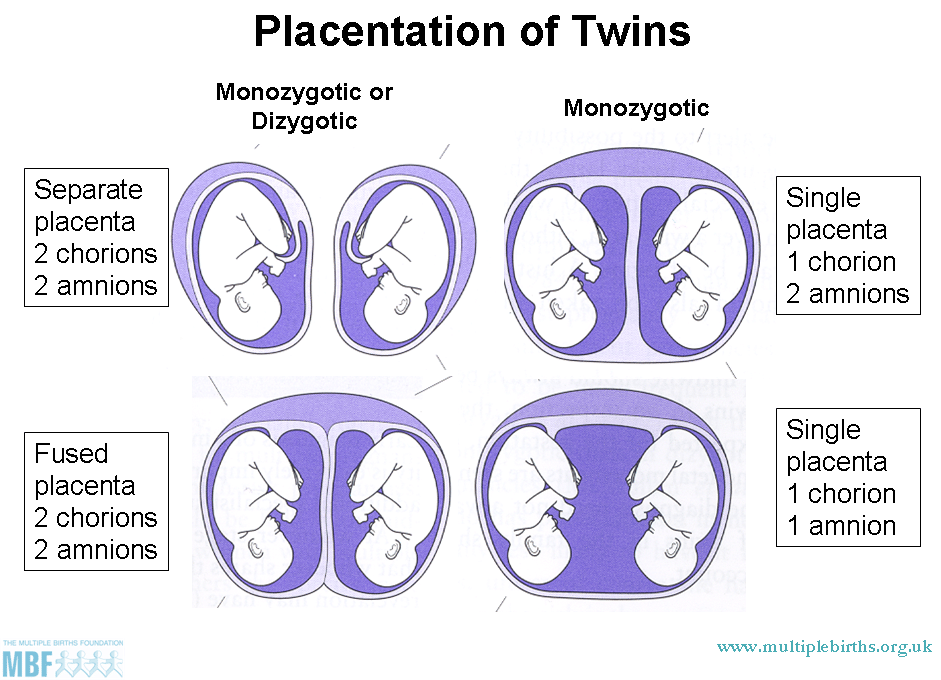
The very first set last week was truly special. The mother was a little younger, 28 years, and was only G3. But she still walked in and barely made it to the birth room before the first baby was born. She was vertex. It was about 3 minutes and the second baby came, complete breech. She was a carbon copy of the first baby, truly. Both babies weighed 2.1kg. These were not born in the caul. The bag of water broke just prior to birth. The placenta came about 10 minutes later and it was then that I saw what they were – monochorionic-monamniotic.

Mono-mono twins are estimated to occur about 1 in 35,000 to 1 in 60,000. They often come with a myriad of complications and when diagnosed early in pregnancy, are closely monitored.
Here in South Sudan, we take what we get. Sometimes we are pleasantly surprised. Both girls are healthy and the pregnancy was term. Sometimes it is nice not to know what you are dealing with before hand.
There are a lot of superstitions in Africa about twins. Here in South Sudan in previous generations, people held the belief that twins were not human. I have no idea of the origin of that belief and no one can explain it to me. They generally held a negative connotation. Some people believed that the mother or father of the babies would die if twins were born. Still others just considered them bad luck. It seems like in recent years the superstition surrounding twins has turned around and people now welcome twins and they are a reason for joy and celebration. I know in our maternity, everyone loves seeing 2 babies come out of the birth room. Every set of twins we have had since I arrived has been full term. They have presented in every combination of presentation there is including vertex/transverse. The transverse after coming twin did not want to go either breech or head down and any any attempt to turn her was thwarted. Since I didn’t want to lose her, I decided to do a breech extraction. It worked beautifully and the baby came right down and out.
I have learned after attending a few hundred sets of twins and a handful of triplets, that things most often`go well with multiples. Most of the time they go to term. Most of the time birth goes well, particularly when the process is left undisturbed. It speaks volumes that in developing countries, with the best healthcare in the world, twins are often preterm, often c-section or high intervention vaginal births. And by comparison, women in some of the poorest countries in the world, living in conditions that can only be considered deplorable, with sub-par nutrition and poor sanitation, tend to have much better outcomes when birthing with a skilled provider. The difference, I think, lies in the approach – the medical model versus the midwifery model. One looks constantly for all the things that can go wrong and that is the sole focus. While the other comes from the perspective that birth is a natural process and things will most likely go well, all the while still being vigilant for anything out of the norm but not focusing on that aspect.
The same is true from the birthers perspective. People in developed countries tend to focus on the “what ifs”, while women in the developing world are often just struggling to survive day to day, particularly in refugee camps, disaster areas and war zones. They carry their babies and give little thought to the pregnancy itself or the process of birth. They just do it.
***For more photos from the field, you can follow me on IG @globalmidwife64 ***


2 Responses
I feel that I do not quite agree with the statement that poor twin outcomes in high-resource countries are rooted in a complication-focused approach. This is one of many reasons. As I see it other reasons may be unhealthy mothers, way more unhealthy and still capable to carry to viability because of medical support, the same with twins that can be artificial from the very beginning, say ovulation stimulation or IVF. Only the most healthy multiples in most resilient mothers make it to term in low resource countries and this may be a reason for good outcomes.
I absolutely agree with you about high resource countries. Excellent point.
I have seen some fairly unhealthy, nutritionally deficient mothers in Africa in particular, carry twins to term. I am not sure how they do it, but they do.
Thanks for your comments! Kristine